You have heard someone describe a fragrance as magical on a friend — then tried it yourself and found something entirely different. This is one of the most common experiences in fragrance, and it has a precise scientific explanation. Your body chemistry is not passive — it actively transforms every fragrance you apply.
Skin pH
Healthy skin maintains a slightly acidic pH of 4.5 to 5.5. This surface acidity varies between people based on genetics, diet, skincare products, and hormones. Fragrance molecules interact with this acid mantle as they evaporate from the skin surface. More acidic skin tends to amplify citrus and fresh notes while softening sweet and heavy base notes. Less acidic skin may produce the reverse effect. The same fragrance molecule, reacting with different pH environments, produces detectably different olfactive results.
Natural Skin Oils and Sebum
Your skin produces sebum — a mixture of fatty acids, wax esters, and squalene that coats and protects the skin surface. Sebum content varies considerably between individuals. Oilier skin provides a richer carrier for fragrance molecules, often extending longevity and deepening the base note character. Drier skin has less sebum to carry the molecules, resulting in faster evaporation and a more fleeting wearing experience. This is one of the reasons moisturised skin consistently performs better as a fragrance carrier.
Body Temperature
Heat accelerates evaporation. People who run warmer — through natural metabolism, exercise, or environment — project fragrances more aggressively and experience faster dry-down. The same fragrance that lasts all day on one person may fade within three hours on someone who runs hotter. This is not a deficiency in the fragrance — it means warm-bodied individuals project more powerfully while the fragrance is present, but may need to reapply for all-day wear.
Skin Microbiome
The skin is home to billions of microorganisms — bacteria, fungi, and other microbes that make up the skin microbiome. This microbiome is as individual as a fingerprint and varies significantly based on genetics, environment, diet, and personal care habits. The microbiome interacts with fragrance molecules, particularly musk molecules, in ways that are still being studied. This explains why some people detect certain musks clearly while others cannot perceive them at all — a phenomenon called specific anosmia.
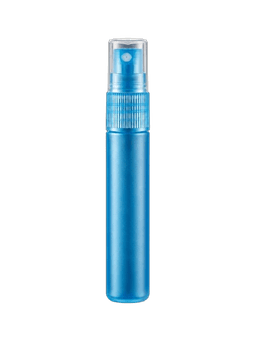
Skye Collection
Sauvage Inspired
Fresh, powerful and magnetic everyday luxury.
Sauvage Inspired contains Ambroxan, a synthetic molecule derived from ambergris that interacts intensely with individual skin chemistry. On some people it projects powerfully for ten hours; on others it becomes a skin scent within two. This is the body chemistry effect in practice — not a quality variation, but a chemistry one.
Explore →Tip: The only reliable fragrance test is on your own skin, worn for a full day. A spray on the wrist in a store for 30 seconds tells you almost nothing about how a fragrance will perform in your specific chemistry.
- Skin pH (4.5–5.5) varies by person and transforms how fragrance molecules evaporate
- Natural skin oils (sebum) extend longevity — drier skin evaporates fragrance faster
- Body temperature accelerates evaporation — warm-bodied people project more intensely
- Skin microbiome affects how musk and base note molecules are detected
- The same fragrance will smell measurably different on two people — this is chemistry
- Test on your own skin for a full day before committing to a full-size purchase
Related Articles
Explore Collections
Continue Learning
Coming Soon
Ask Maison AI
Get personalised fragrance guidance powered by the Maison Knowledge Catalogue.